Freeride
From the edge of the pisteto the powder bowl.
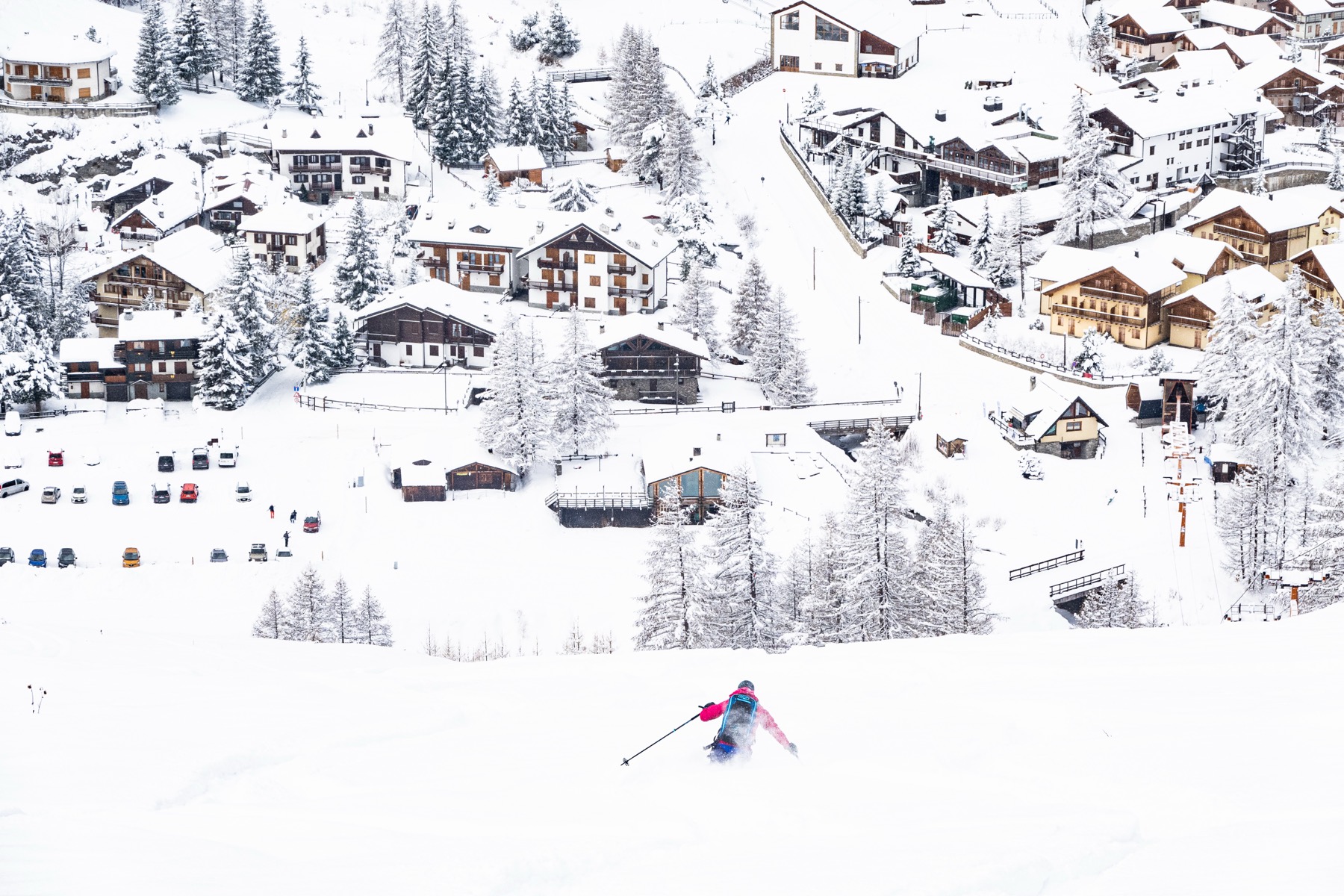
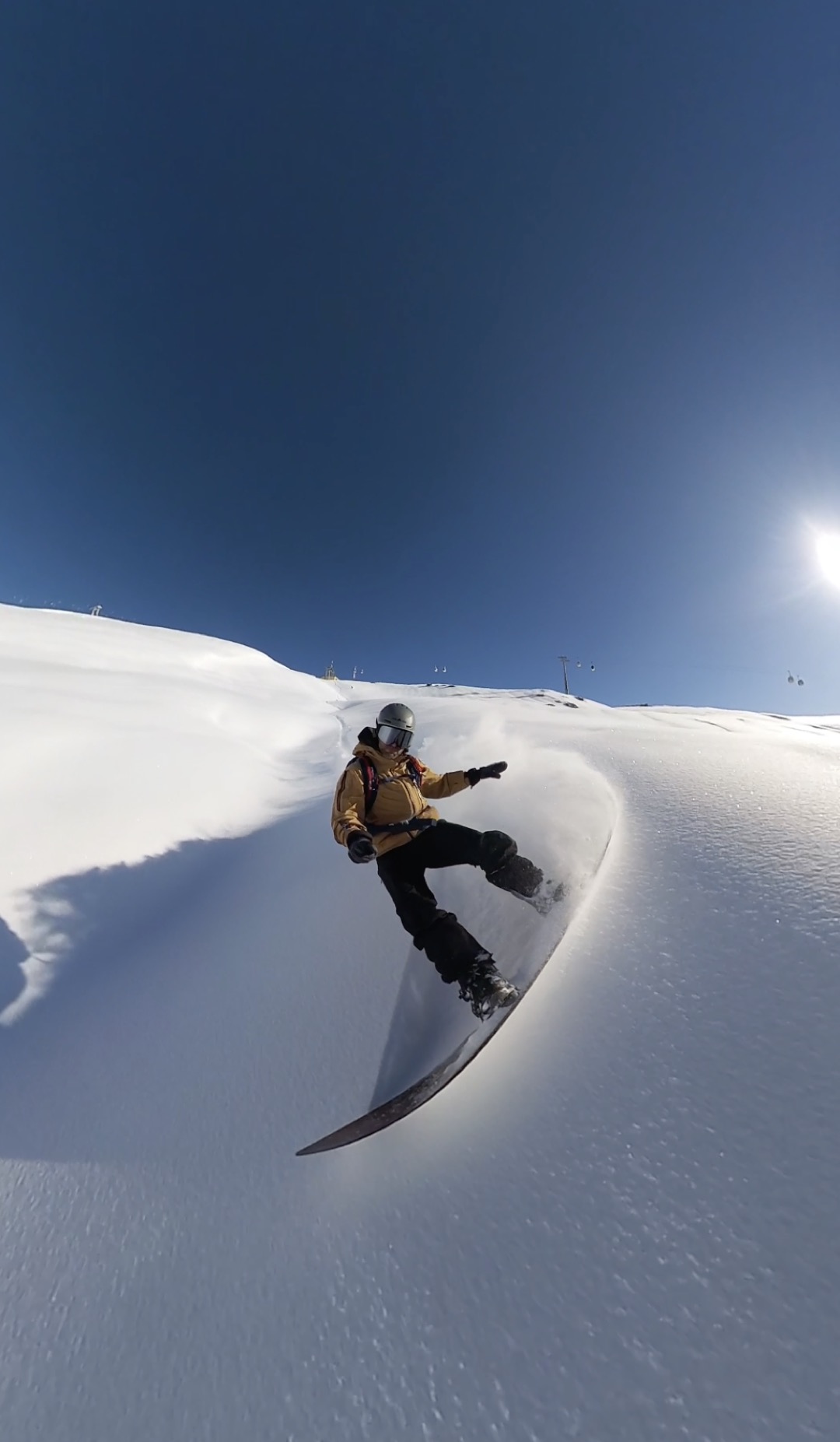
The Via Lattea lifts take you up high. From there, off-piste begins where the groomed snow ends: two turns in the soft stuff or a whole bowl, on a solid board or on skis. You bring the level you’ve got — I choose the right terrain.
Start on the right foot
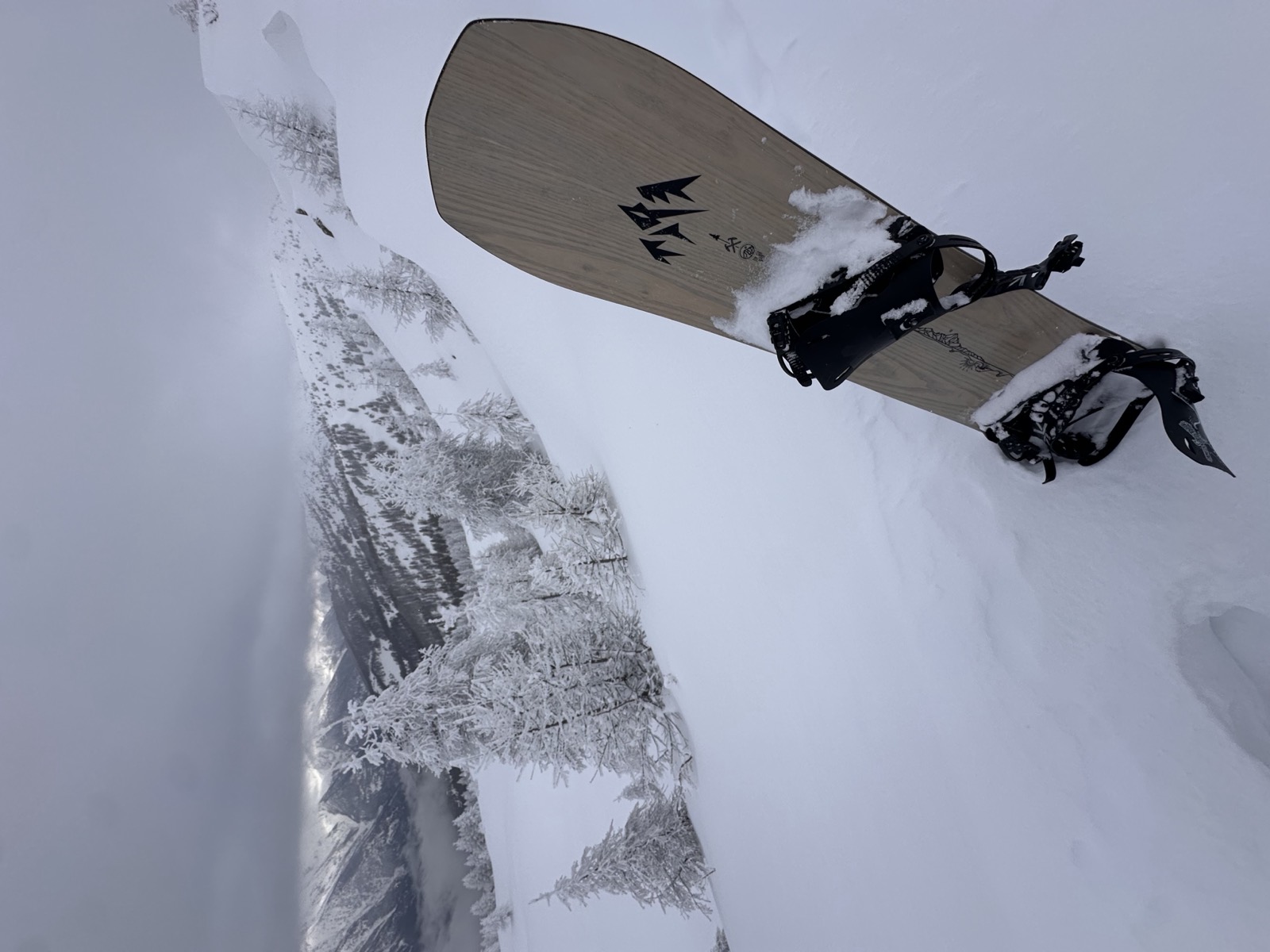
Find out which Jones board suits you, and keep the guide to going off-piste safely on your phone. Two minutes each, and you’re better prepared than before.

the guide 32 pages, free
I’ll send it to you →
The guide to avalanche prevention and search — free.
Off-piste doesn’t mean far away. It means where the groomed snow ends — and from there you decide how far to go.
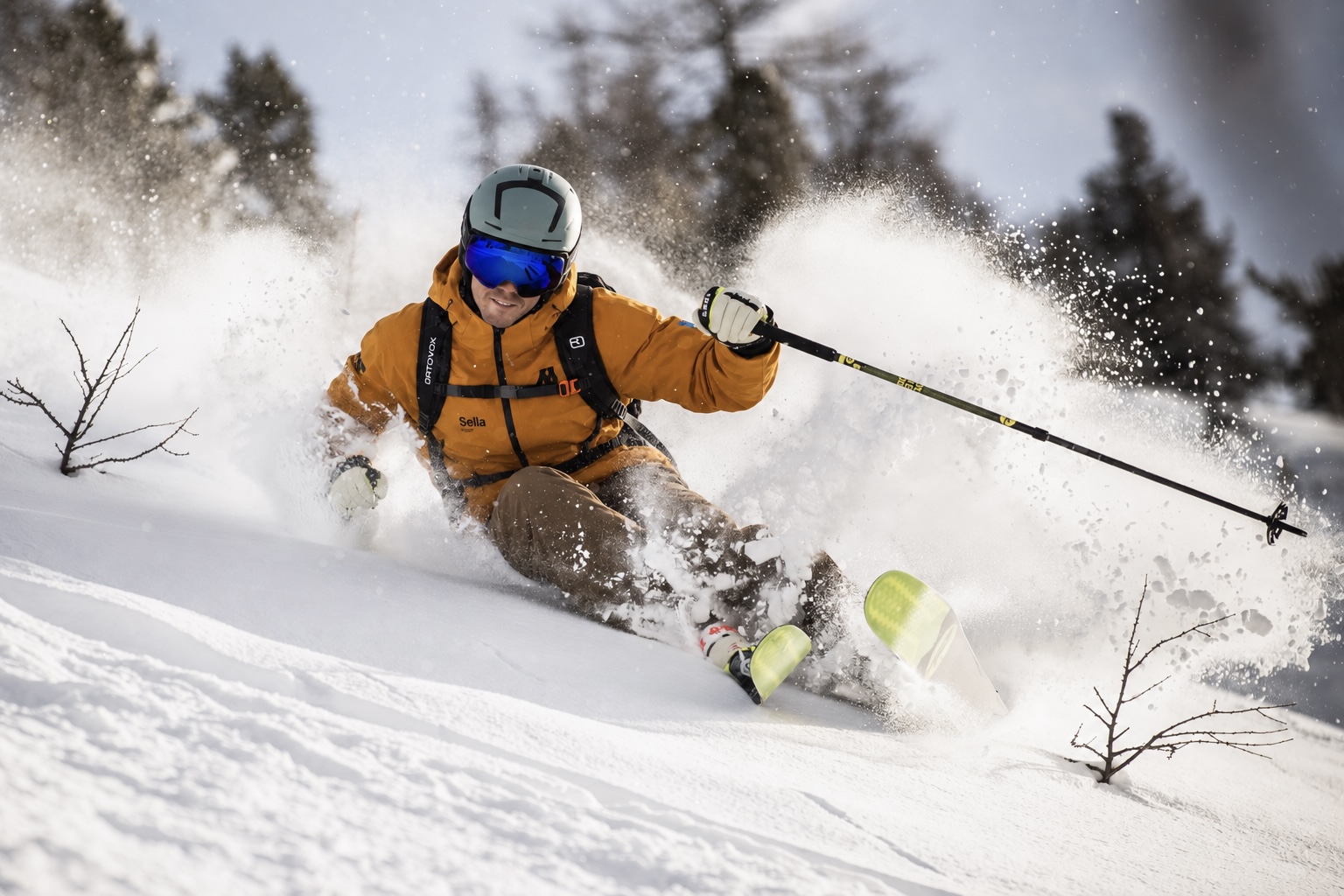
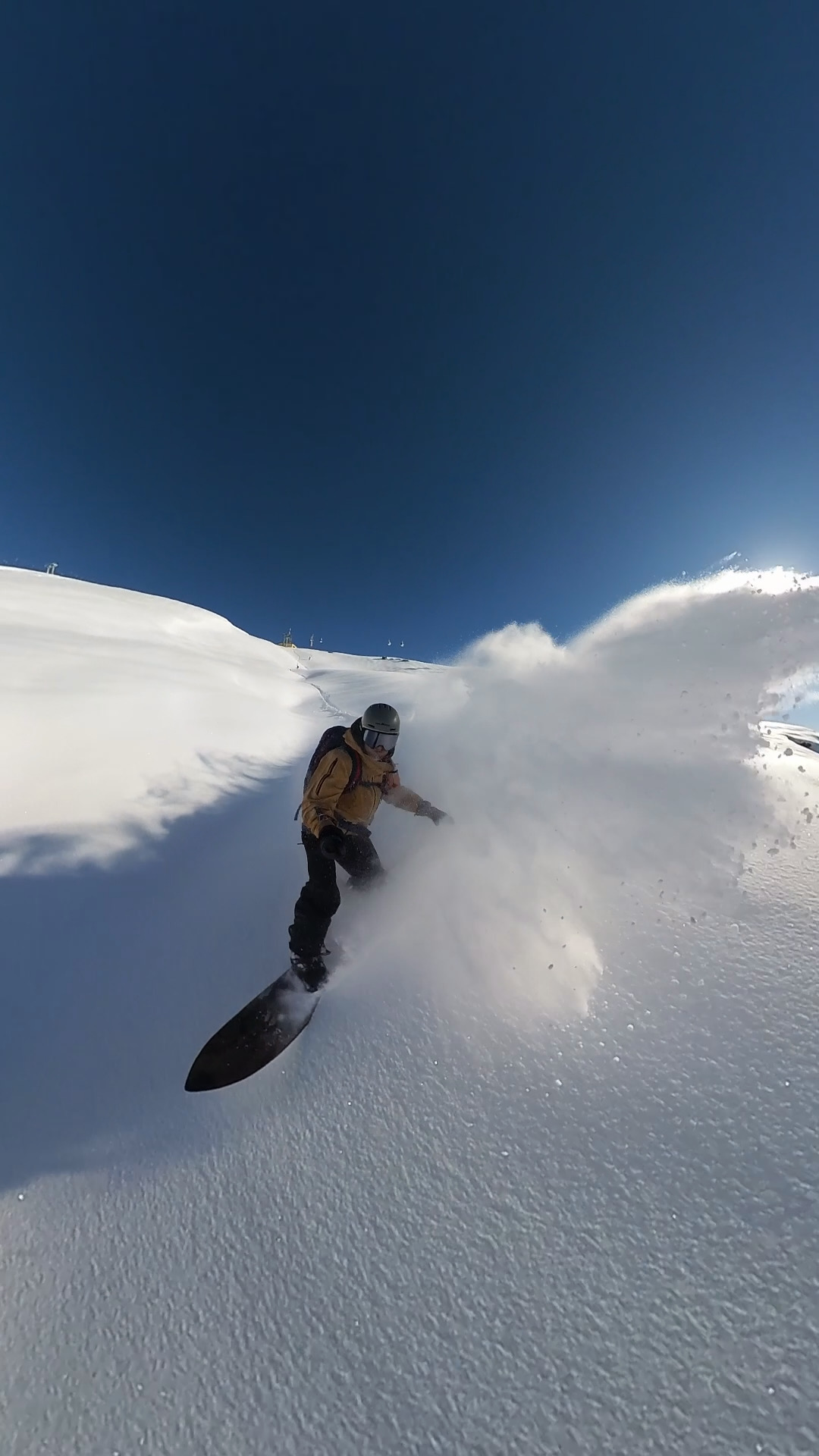
Freeride means riding off the groomed pistes, on snow no snowcat has touched. On a solid board or on skis: you need no other kit.
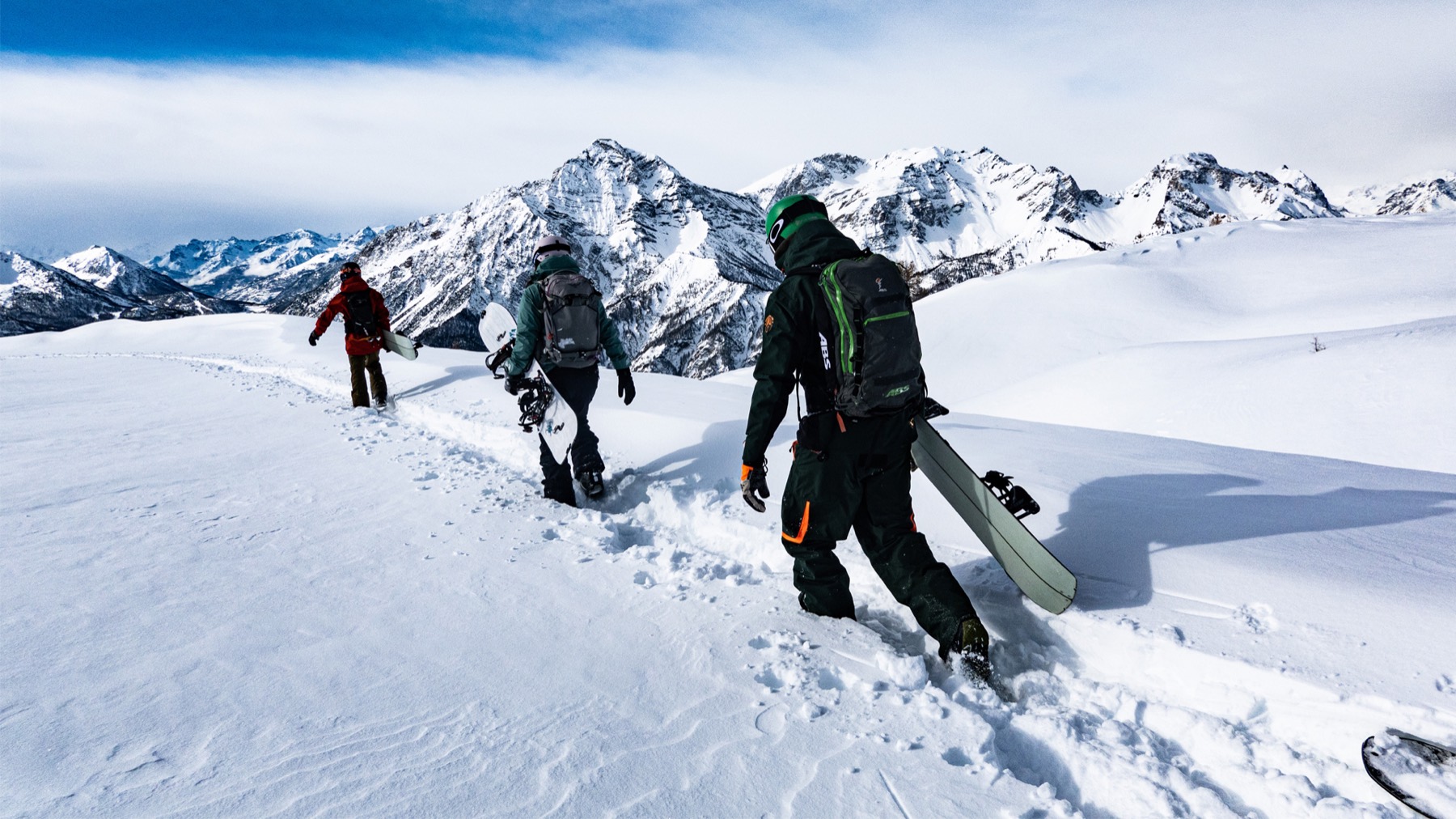
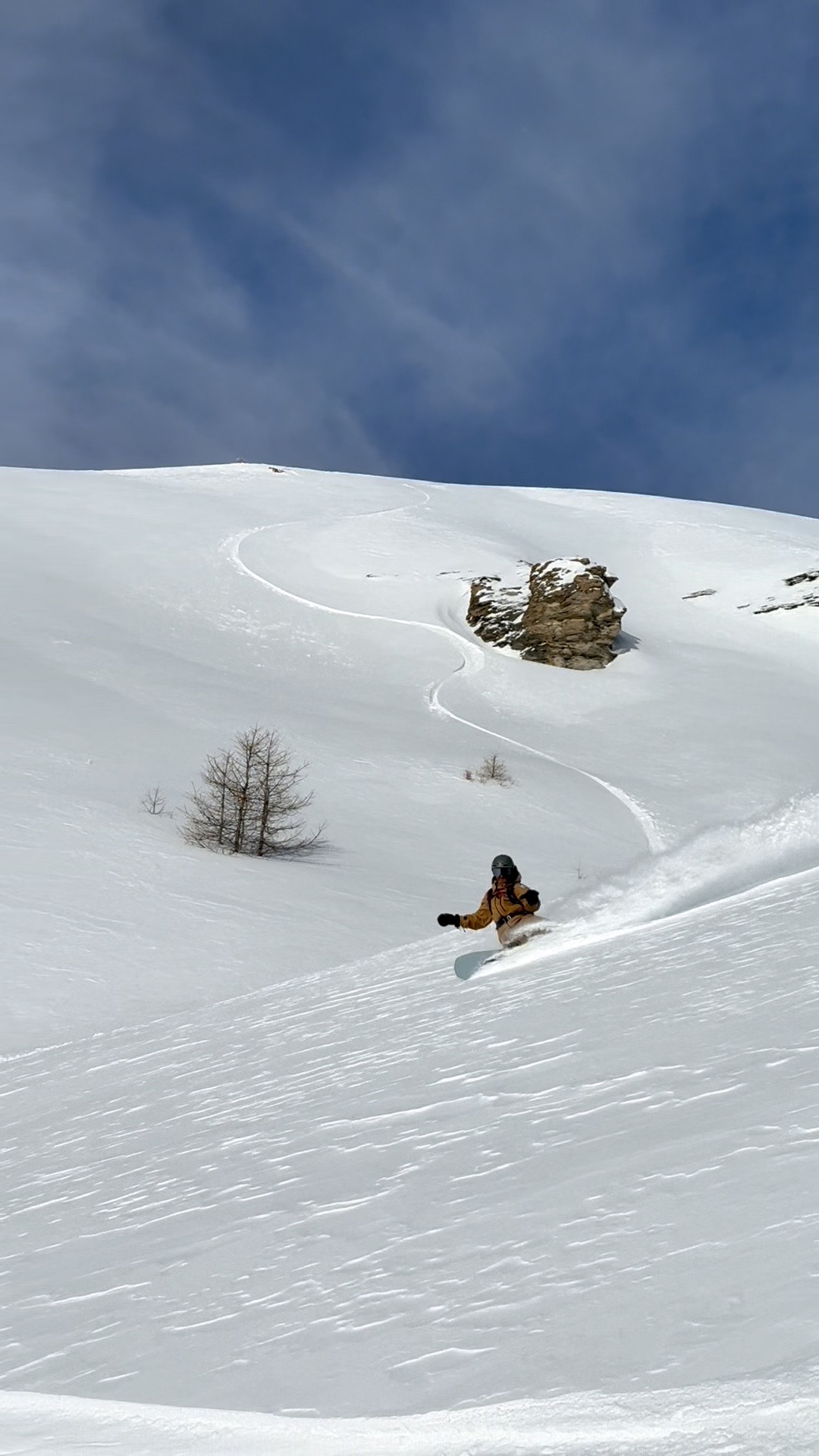
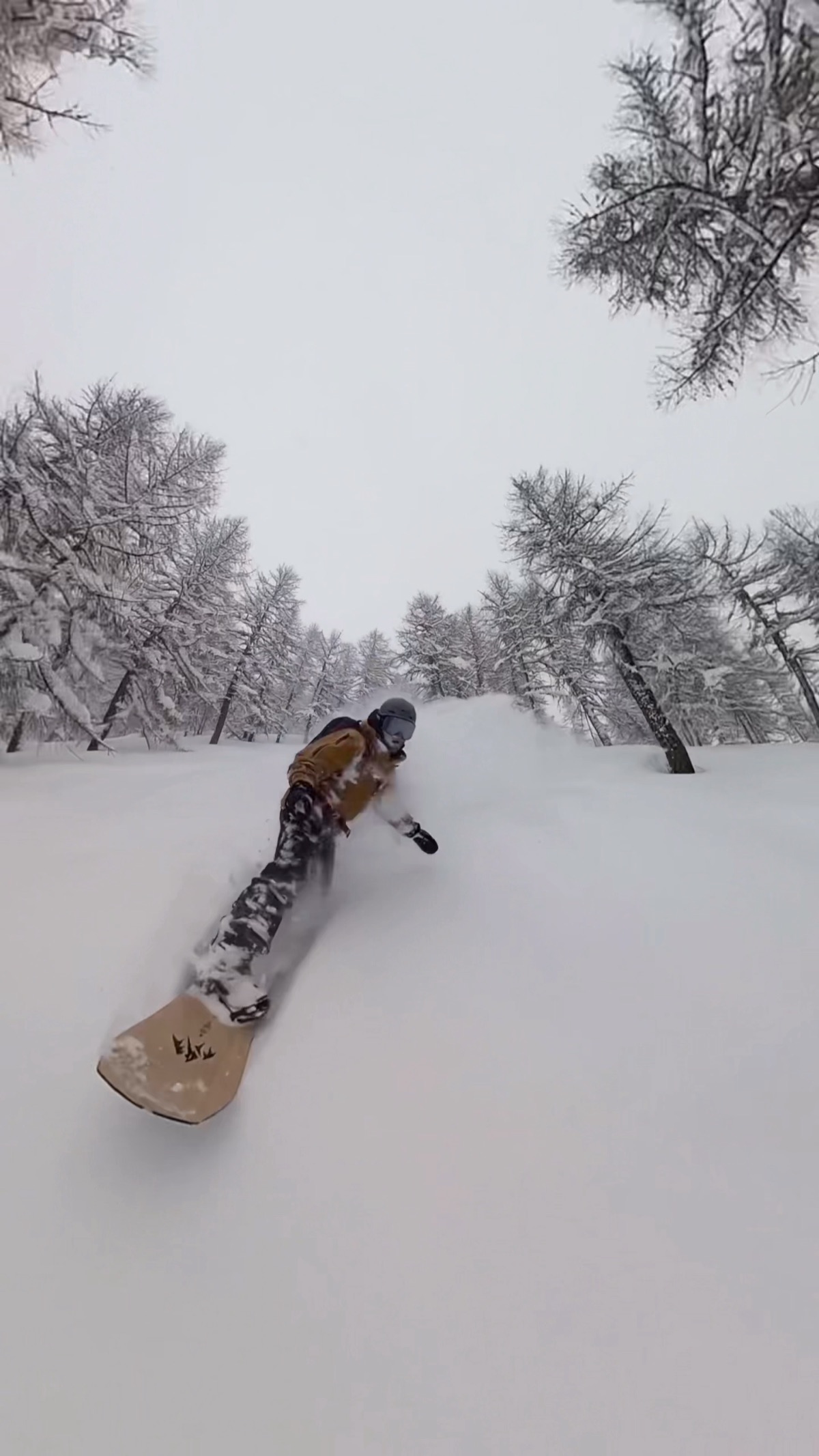
The Via Lattea lifts put you up high, and from there the off-piste begins: just to the side of the piste, stretching as far as you like. Powder, bowls, trees — the mountain you never reach from the groomed runs.
That’s what makes it suitable for almost everyone. The range is wide: it starts at the edge of the piste, where you just need to change direction safely, and goes all the way to powder bowls and tree runs, where you need to read the mountain.
A ski areamade of mountainsides
The Via Lattea is 400 km of pistes straddling the Italy–France border. But the real richness is what lies to the side: terrain as varied as it gets, with a huge range of difficulty. That’s why there’s an off-piste run for every level.
- I.
You reach it all by lift: from Sestriere and the Via Lattea slopes you’re up high in minutes.
- II.
From the edge of the piste to the bowl: you can stay two turns off the groomer or push into the wide bowls and the tree runs in fresh snow. We decide based on your level.
- III.
Italy and France in the same day, following wherever the snow has held best. Bring ID.
Choose how muchtime you have
The price is for the whole group, not per person. Maximum five people: off the groomed runs, above that number you can’t stay together properly. Solid board or skis, as you prefer.
 From €250
Half day
The most direct way to get a taste of off-piste.
8:30 am to 12:30 pm. We warm up on the piste, then ride the lifts up and drop into the soft snow. We choose the terrain to match your level: from the edge of the piste to the first bowl.
- 1 – 2 people
- €250group
- 3 – 5 people
- €300group
 €450 · group
Full day
A full day to chase the good snow.
We head wherever the snow has held best, move around the ski area and switch mountainsides. This is the option where we cross the border and, if you like, fit in lunch at a mountain hut.
- 1 – 5 people
- €450group
How the groups are formed. One instructor takes one discipline: the snowboard group goes out with the snowboard instructor, the ski group with the ski instructor — they don’t mix. A mixed group, skis and snowboard together, is possible, but it needs two instructors, one per discipline: tell us when you book so we can set it up properly.
Freeride is for everyone.But you need a minimum
The good news: you don’t have to be an expert rider. The less good news, if we want to call it that: a minimum level is needed. You have to be able to handle the board — or skis — on a blue run, and change direction, frontside and backside, safely. From there on we choose the terrain based on how you ride, not on how fit you are.
Your first time off-piste
You can ride a blue run safely and change direction without thinking about it. We take you to the edge of the piste, two turns in the soft snow, easy terrain. Younger children are welcome too, with safety equipment in their size.
Two turns off the groomerYou’ve got the taste for it
Off-piste doesn’t scare you, you can read variable snow, you carve on reds and blacks. Here we move further from the groomed runs: wider bowls, the first tree runs, longer traverses.
Off the groomed runs, properlyYou’re after the line
Powder, long slopes, dense trees, the odd couloir. You can read the terrain and you want the real mountain. This is where knowing the area by heart makes the difference.
The whole mountainThe minimum, in practice: you can stop and change direction on a blue run, frontside and backside. You have — or hire from us — the safety equipment. That’s all: the rest, reading the snow and choosing the line, is my job. And it’s exactly the same on skis: anyone who skis a red run well off the groomer is just as ready as a boarder.
From the first coffeeto the last turn
Here’s how a day of freeride with me is made up: from the morning meeting point to the last descent. You know what to expect before you even book.
Meet at the meeting point
We meet in Piazza Kandahar, in front of the Surfshoppe. We check the kit piece by piece — transceiver, shovel, probe, backpack — and anyone hiring collects their board or skis and safety kit there, already in the right size.
Coffee and the first turns
A coffee together, then we ride the lift up for a couple of runs on the piste. It’s to warm up, but mostly it’s for me: watching you ride, I see how you are on your board or skis, and from there I decide where it makes sense to take you today.
The first off-piste line
We ride the lifts up high, then drop into the soft snow where your level allows — at the edge of the piste or inside a bowl. We ride down, read the snow and start again.
The heart of the dayThe half day ends here
Through the morning we stop when we need to: a drink, and whatever each person has in their backpack — bars, nuts, light stuff. The half day finishes here, with one or two lines ridden.
End · half dayMountain hut or refuge
Anyone who booked the full day stops to eat in a mountain hut or refuge, with local produce. It’s the half-hour where you warm up, talk through the descent and decide together where to go next: for many it’s the part they remember most.
Full day onlyWe switch mountainsides
Using the ski area we move to wherever the snow has held best — even on the other side of the border — and put together another line, maybe two. We finish in time for the last lifts.
Full day onlyThen, as always, the snow decides. If the wind has wrecked the mountainside we had in mind, or the other side is in better shape, we change the plan: I’ll tell you in the morning over coffee and we choose together where to go.
Off-pisteyou go equipped
Off the groomed runs, no one makes the mountain safe: no snowcat grooms it, no one triggers the avalanches. Even two turns from the piste, the avalanche risk is real. That’s why you don’t go out without the equipment and without knowing how to use it.
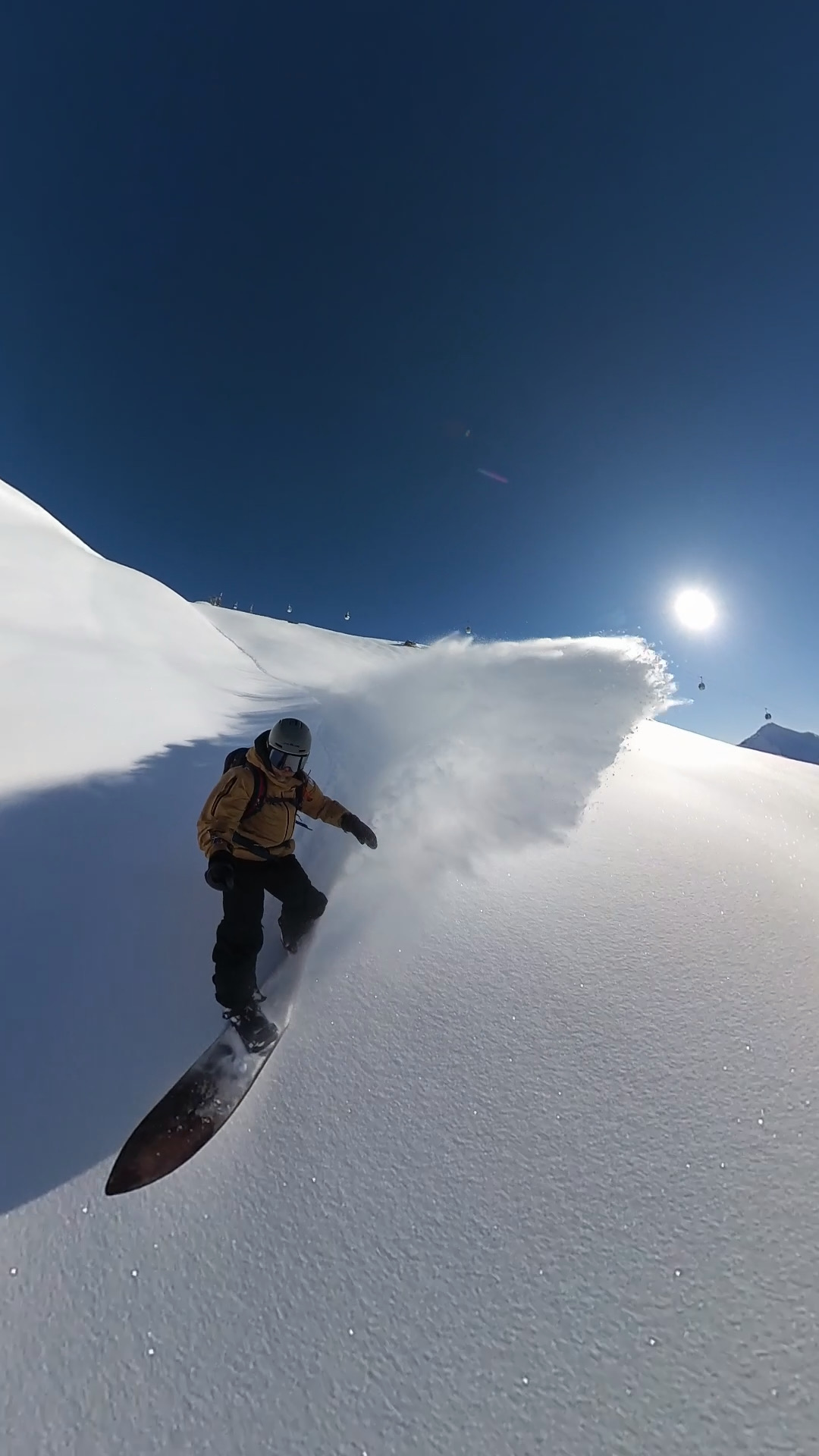
The minimum kit is always the same, for every person in the group: transceiver, shovel and probe. The transceiver is the device that lets you be found — and lets you find the others — if the snow sweeps you away. On the Via Lattea there’s a Safety Checkpoint where you test your transceiver before setting off: we go through it, every time.
And there’s one more level: the airbag backpack (ABS). In an avalanche you deploy it and it helps you stay on the surface. Not everyone has one — we do, and we hire it out, because in Sestriere we have a specialist shop.
Locals,who know the lines
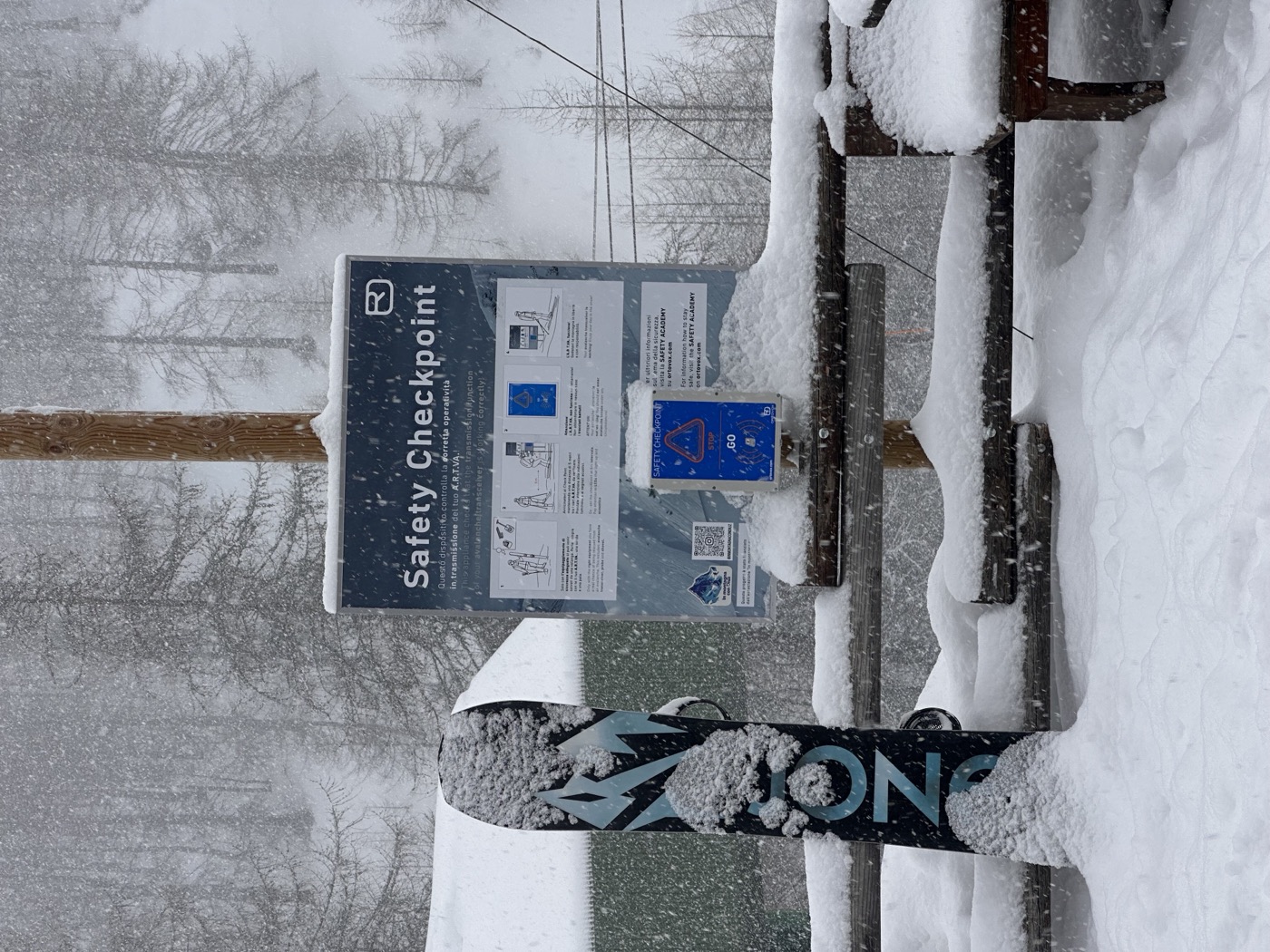
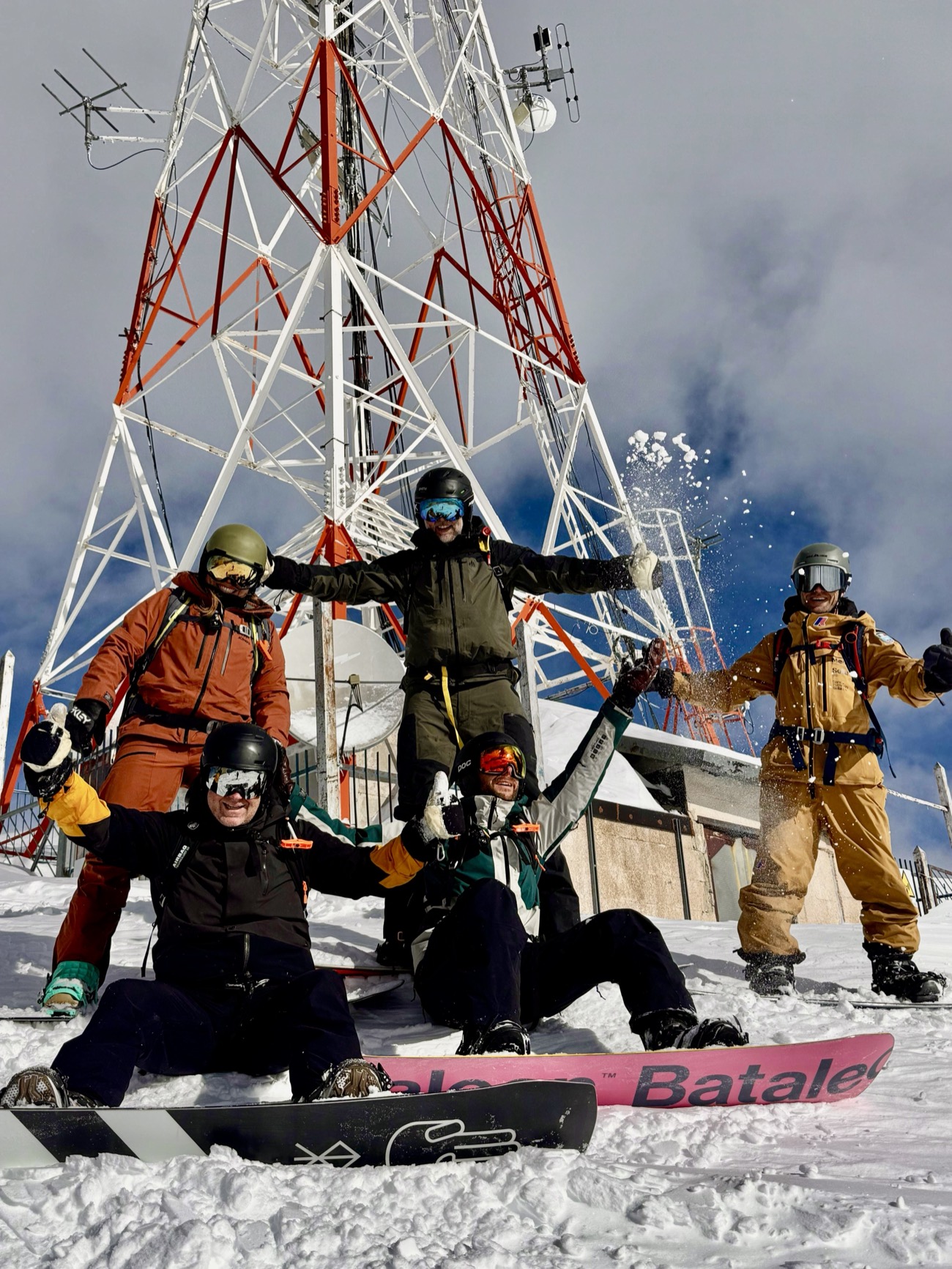
Preskige freeride isn’t down to one person. It’s a group of expert freeriders — ski and snowboard instructors — who have been riding these slopes for years. They know which one holds the snow three days after a snowfall, what time of day rides best, and the lines you can’t even see from the piste.
Coordinating the school’s freeride section, ski and snowboard, is Gigi Lozzi, a snowboard National Instructor (the highest Italian national teaching qualification, awarded by FISI). He takes those on snowboard; for skiing there are the team’s instructors and experts. One way or another, whoever takes you off-piste knows the mountain by heart.
The list,no shortcuts
Haven’t got the gear? No problem: in Sestriere we have the specialist shop. Board or skis, transceiver, shovel, probe and even the airbag backpack: tell us when you book and you’ll find it all ready in the morning, in the right size.
Ask about hireLunch at a mountain hut
The bit that turns a session into a day out. You take off your backpack, eat in a Via Lattea hut and relive the descent by telling it. We book it for you.
Shuttle
When the best line doesn’t come back to where it started, we pick you up in the valley. That way you choose the right descent, not the convenient one.
Photographer
A photographer who rides down with you. The first snowfall wipes out your tracks — the photos stay.
Whatpeople always ask us
No. Freeride has a wide range: you can start from a low level. The real minimum is being able to handle the board — or skis — on a blue run and change direction, frontside and backside, safely. From there we choose the terrain based on how you ride: beginners stay at the edge of the piste, in the easy soft snow.
Yes, younger children too, as long as they can ride down and stop on an easy run. We take them to the edge of the piste, on soft, controlled terrain. The one non-negotiable condition is safety equipment in their size: transceiver, shovel and probe come in children’s sizes too, and we hire them out.
Both, but each with their own instructor: snowboarders go out with a snowboard instructor, skiers with a ski instructor. The terrain, reading the snow and the safety rules are the same for both.
A mixed group, with skis and snowboard together, is possible — but it needs one instructor per discipline, one for skiing and one for snowboarding. If that’s your group, tell us when you book and we’ll set it up.
It’s up to you. The off-piste already begins at the edge of the piste: that can be enough, two turns in the soft snow beside the groomer. Or you push into the bowls and the tree runs in fresh snow, where you need to read the mountain. That’s the beauty of freeride: the same session is tailored to the group’s level.
They’re always needed, all three, for every person in the group: you don’t go off the groomed pistes without them. If you haven’t got them, say so when you book: we have the specialist shop in Sestriere and we hire them out — along with the airbag backpack, if you want it.
If you have them but have never really used them, tell me when you book: transceiver search is a skill you train, and we can spend some time on it during the session.
It’s a backpack with an airbag you deploy by pulling a handle: in an avalanche it helps you stay on the surface. It doesn’t replace the transceiver, shovel and probe — it adds to them. It’s an extra level of safety, strongly recommended when you move away from the pistes. Haven’t got one? Hire it from us.
No, the lift pass is bought separately. And you need it: the lifts take you up high, so without one you can’t start. The session price covers the instructor and the group. Same goes for equipment hire, if you need it.
From 1 to 5 people, for both the half day and the full day. The price is for the group, so the more of you there are the less each pays. We don’t go above five people: on ungroomed snow a big group spreads out, waits around and safety drops.
On the Via Lattea. The exact spot is decided on the morning itself: it depends on where it has snowed, how the wind has worked and what time it is. That’s the advantage of having 400 km of ski area: there’s almost always a good line somewhere.
We often end up on the French side. Bring ID.
Tell me what kind of rider you are,I’ll handle the rest
Write to me on WhatsApp: I’ll tell you what the conditions are like these days, which session makes sense for you — board or skis — and what you need. If you haven’t got the equipment, we’ll take care of it.
Our partners