Splitboard
It doesn’t just take you up.It makes you ride down better.
The Via Lattea lifts take you up high. From there a short skin and you’re above bowls you can’t touch from the piste. Then you ride down and start again. Here we count lines, not vertical metres.
Find yourline Seven questions and I’ll tell you which session is right for you →
Here we’re after lines, not vertical. The climb is just the missing piece to reach the good snow.
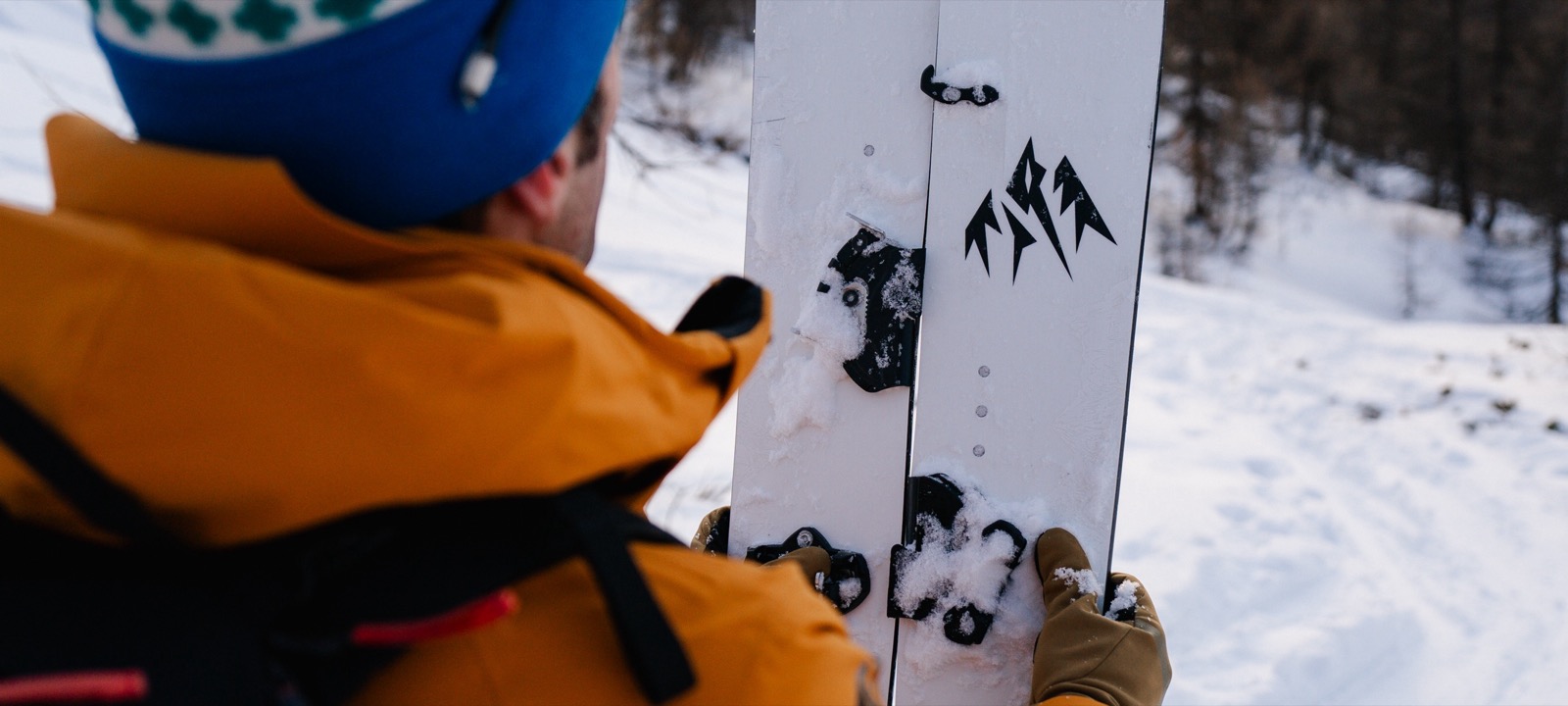
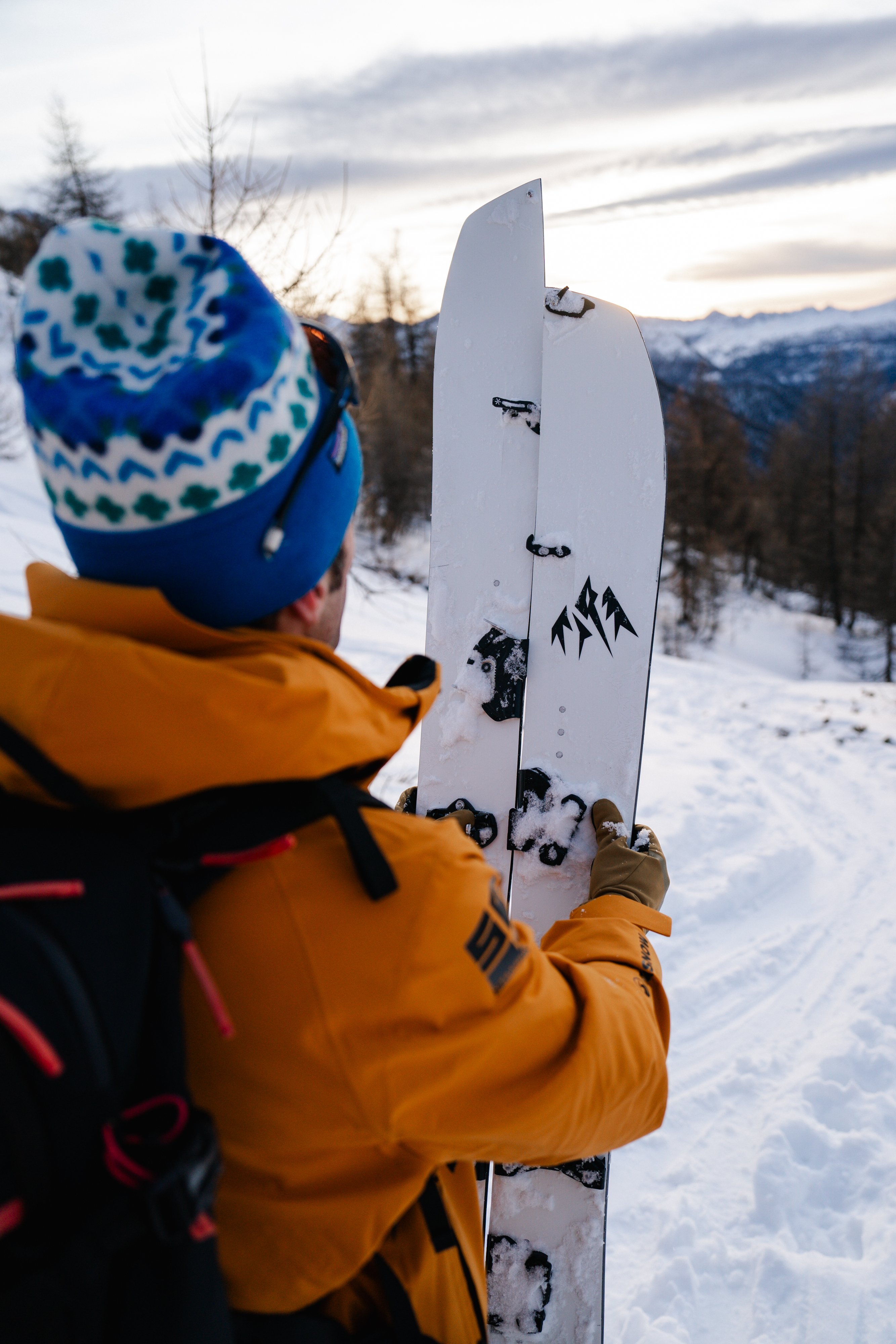
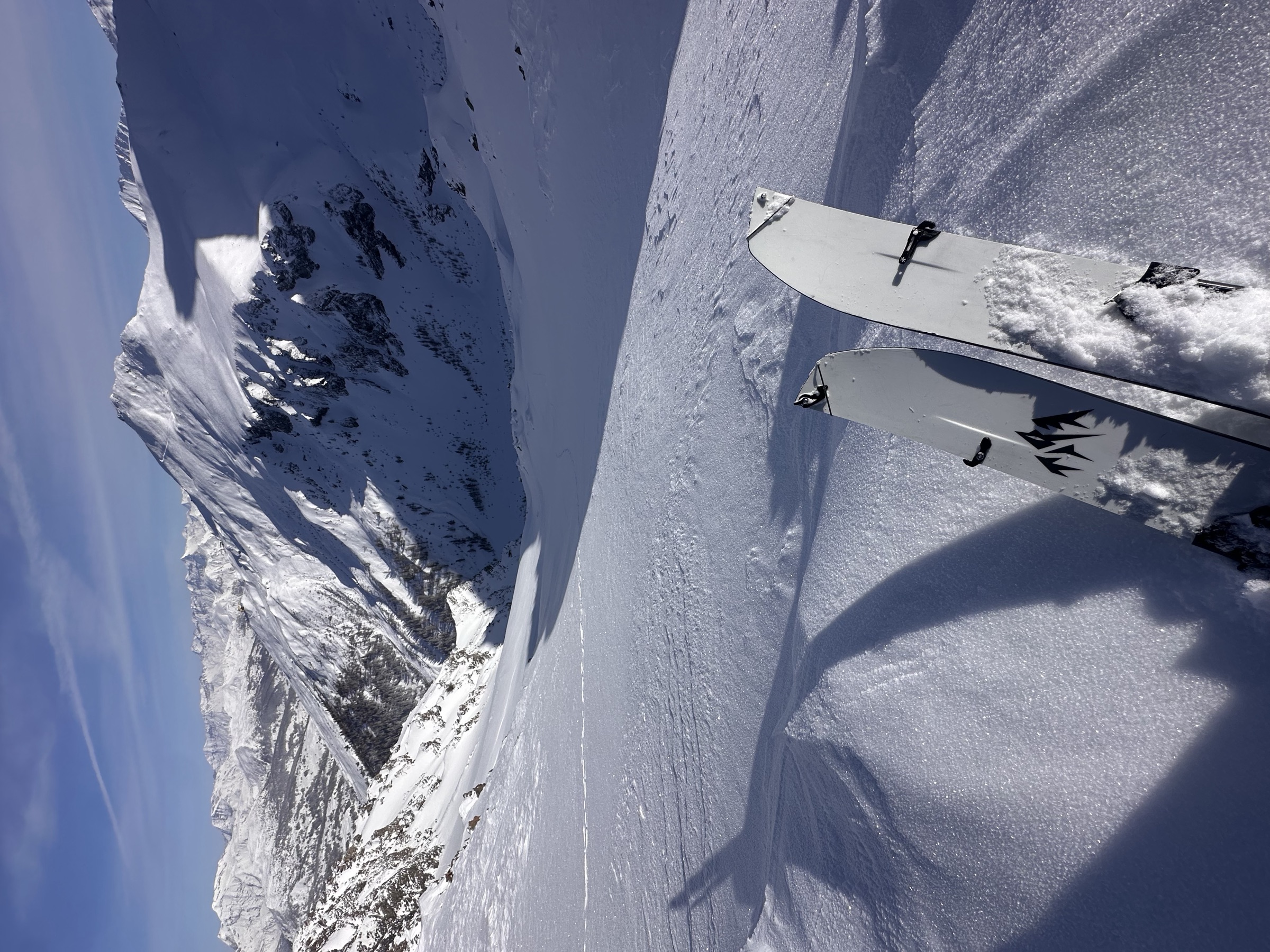
A splitboard is a board that splits in two. Climbing skins go underneath, you walk the bare minimum and at the top you clip it back together: two minutes and you’ve got a snowboard under your feet again.
It isn’t ski touring and it isn’t snowboard mountaineering. We’re not selling you a climb with a descent tacked on the end: we’re selling you freeride. The point is to reach lines you can’t get to from the lifts — and to ride more than one in the same day.
Today’s boards genuinely allow it. The interface between binding and board has reached a point where, on the descent, you can’t feel the difference from a solid board. What used to be a compromise is now just one more advantage.
Madefor splitboarding
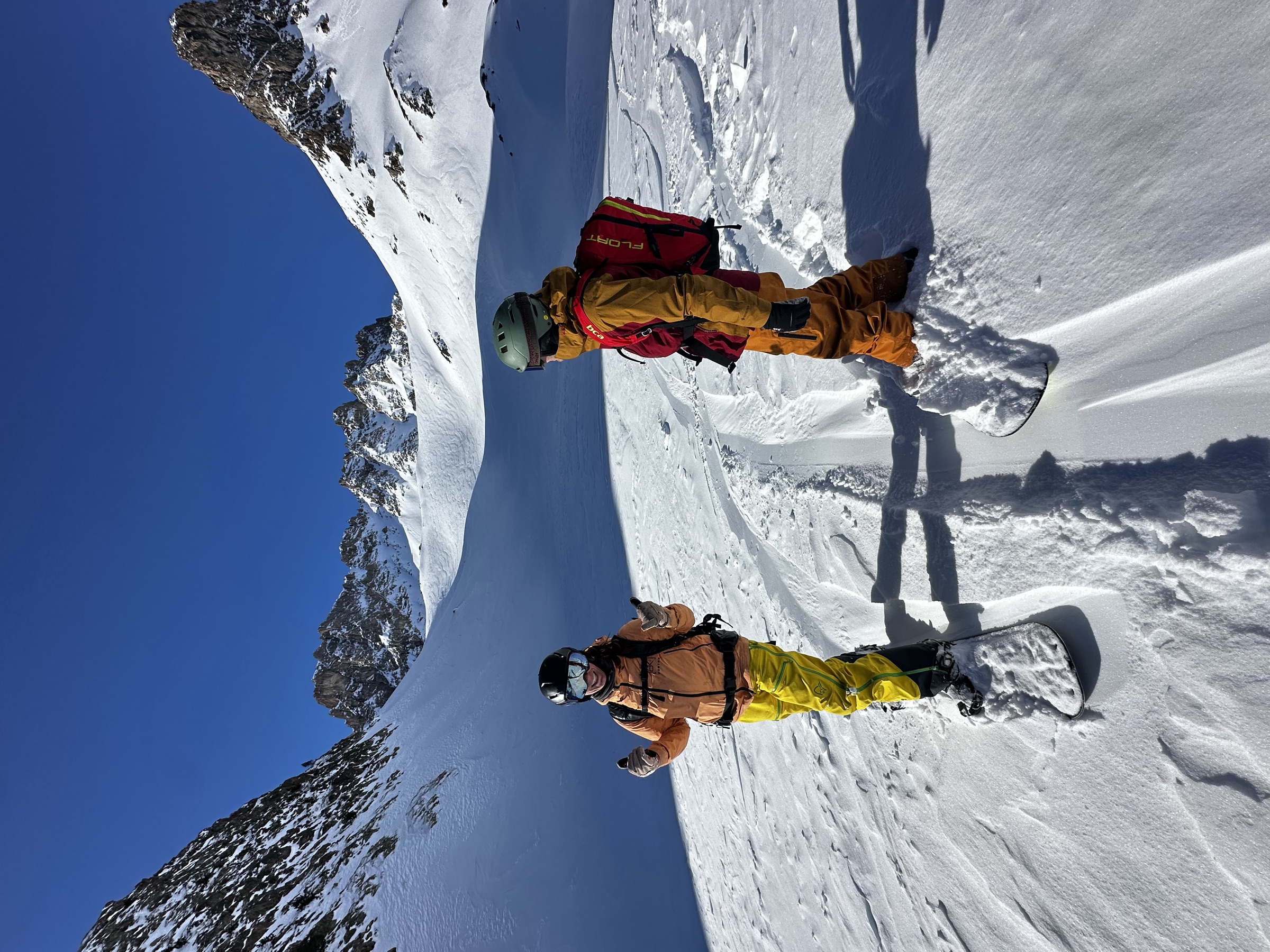
The Via Lattea feels built for splitboarding: the lifts take you up high, but never too high. No mountaineering terrain — wide slopes, bowls that open up right away and become reachable the moment you put on your skins.
- I.
Sometimes a single lift ride is enough: the Cit Roc chairlift in Sestriere or the Fraiteve gondola. From there it’s a short skin and you’re already at the start.
- II.
What open up are the area’s classic bowls: not hard, but they need reading — aspect, time of day, which side has held the snow.
- III.
And you cross the border: Italy and France in the same day, the kind of thing you talk about over dinner.
Choose how muchtime you have
The price is for the whole group, not per person. Maximum five people: above that number, on ungroomed snow, you can’t stay together properly.
 From €250
Half day
The most direct way to get what this is about.
8:30 am to 12:30 pm. Lift, a short skin and you’re on the first line. If the group has the right pace, there’s room for a second: you ride the chairlift back up and switch mountainsides.
- 1 – 2 people
- €250group
- 3 – 5 people
- €300group
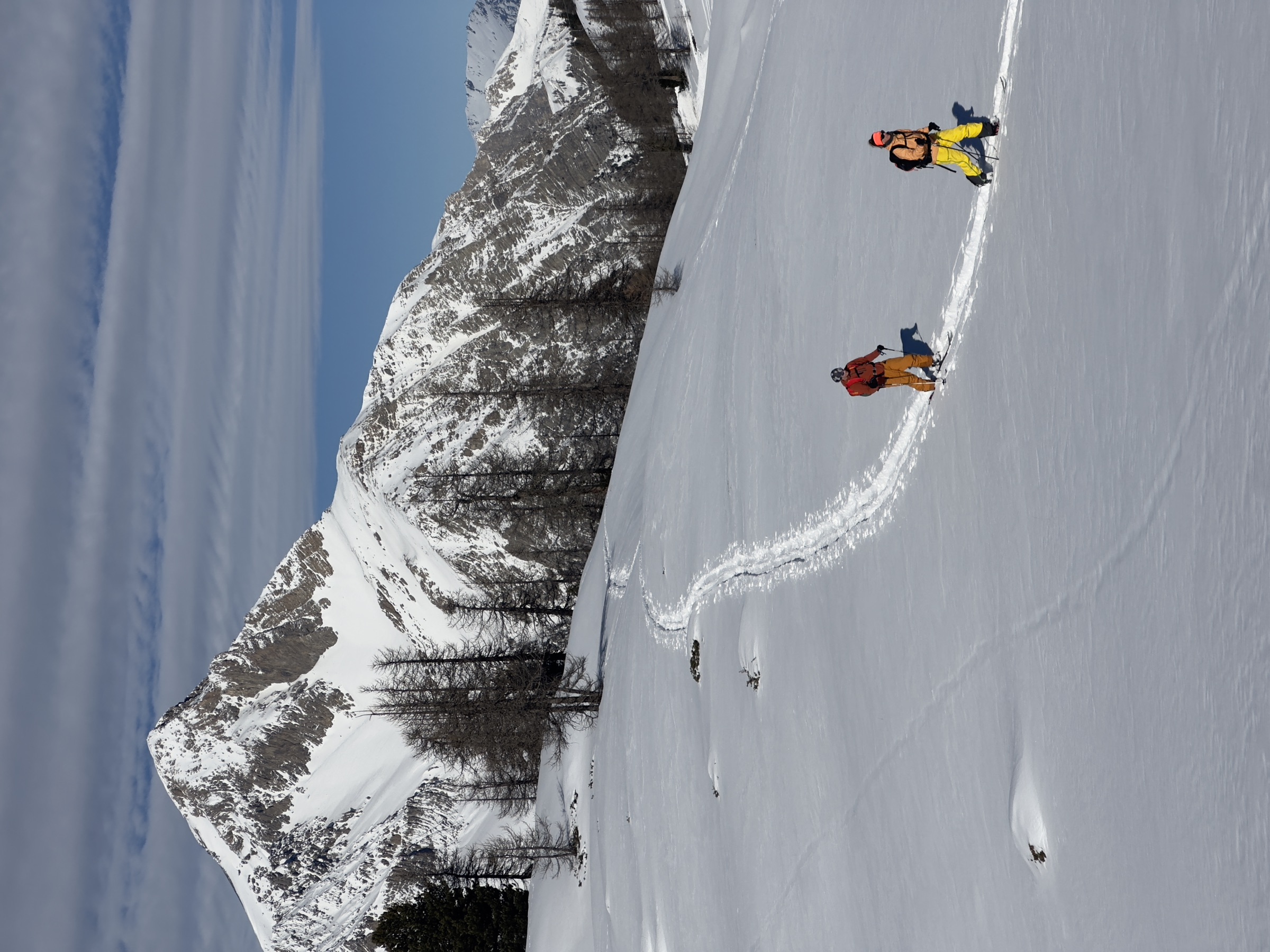 €450 · group
Full day
You switch mountainsides. You never come back on the same track.
A full day to follow the snow: we head wherever it has held best, ride down, move around the ski area and set off again. This is the option where we cross the border and, if you like, fit in lunch at a mountain hut.
- 1 – 5 people
- €450group
Touring Experience
Three days to learn touring from the start, in the right order.
This is where we do talk about climbing — because it’s the course where you learn it. We start with technique on the piste, move through off-piste on the lifts and transceiver search, and finish with the splitboard on your feet and a first proper tour. Open to all levels, from 1 to 5 people.
We watch how you ride
Three hours of private lesson: technique on the piste and a first taste off it. On ungroomed snow mistakes cost double, so that’s where we start.
Off-piste and transceiver search
Half a day of freeride reached on the lifts and, the same morning, transceiver, shovel and probe: how to search for a buried companion. It’s not theory — you dig.
Skins on and we climb
A technical safety assessment on the splitboard and a first tour: assembly, pace, kick turns, managing the group.
Three days: 3 hours + two half days (9:00–13:00). The more of you, the less each pays.
- 3 hours of private lesson, on and off the piste
- Half a day of lift-accessed freeride + transceiver search
- Half a day of safety assessment on splitboard, with a tour
From the first coffeeto the last turn
Here’s how a day with me is made up: from the morning meeting point to the last descent. You know what to expect before you even book.
Meet at the meeting point
We meet in Piazza Kandahar, in front of the Surfshoppe. We check the kit piece by piece — bindings, skins, transceiver, shovel, probe — and anyone hiring collects their splitboard there, ready and in the right size.
Coffee and the first turns
A coffee together, then we ride the lift up for a couple of runs on the piste. It’s to warm up, but mostly it’s for me: watching you ride, I see how you are on the board and from there I decide where it makes sense to take you today.
The first line
We ride the lift as far as it goes, then skins on and walk the piece that’s left. At the top you clip the board back together, look at the line to ride — and down we go. If the group has the right pace, we climb back up and ride another.
The heart of the dayThe half day ends here
Through the morning we stop when we need to: a drink, and whatever each person has in their backpack — bars, nuts, light stuff. The half day finishes here, with one or two lines ridden.
End · half dayMountain hut or refuge
Anyone who booked the full day stops to eat in a mountain hut or refuge, with local produce. It’s the half-hour where you warm up, talk through the descent you’ve just ridden and decide together where to go next: for many it’s the part they remember most.
Full day onlyWe switch mountainsides
Using the ski area we move to wherever the snow has held best — even on the other side of the border — and put together another line, maybe two. We finish in time for the last lifts.
Full day onlyThen, as always, the snow decides. If the wind has wrecked the mountainside we had in mind, or the other side is in better shape, we change the plan: I’ll tell you in the morning over coffee and we choose together where to go.
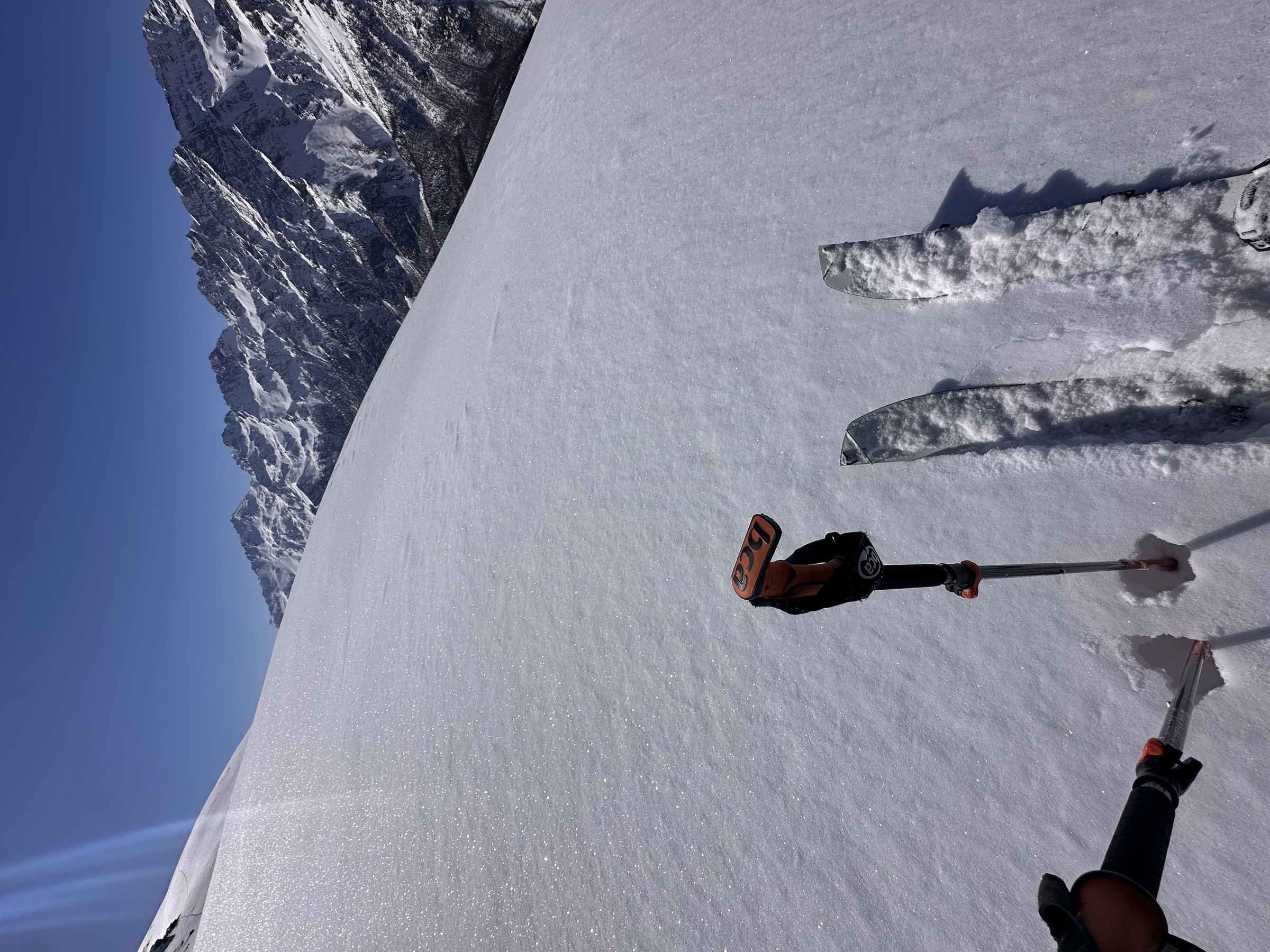
Transceiver search,in the field
A day built purely on safety, but not in a classroom and not on a practice field: you climb on splitboards and simulate a real burial, where it would actually happen.
With tiredness on you, difficult terrain underfoot, a group to coordinate and the minutes running down. It’s the only way to find out whether what you can do in theory you can also do when it counts — and to learn to do it with others, which is the part no one ever practises.
The experience is built to measure: on your own, in a group or with colleagues. That’s why there’s no set price: write to me and we’ll plan it together, calmly, around the number of people and the time you have.
For companies: as team building it works better than any meeting room. Roles to assign, time running out, a person to find. Who leads shows up there.
Let’s talk →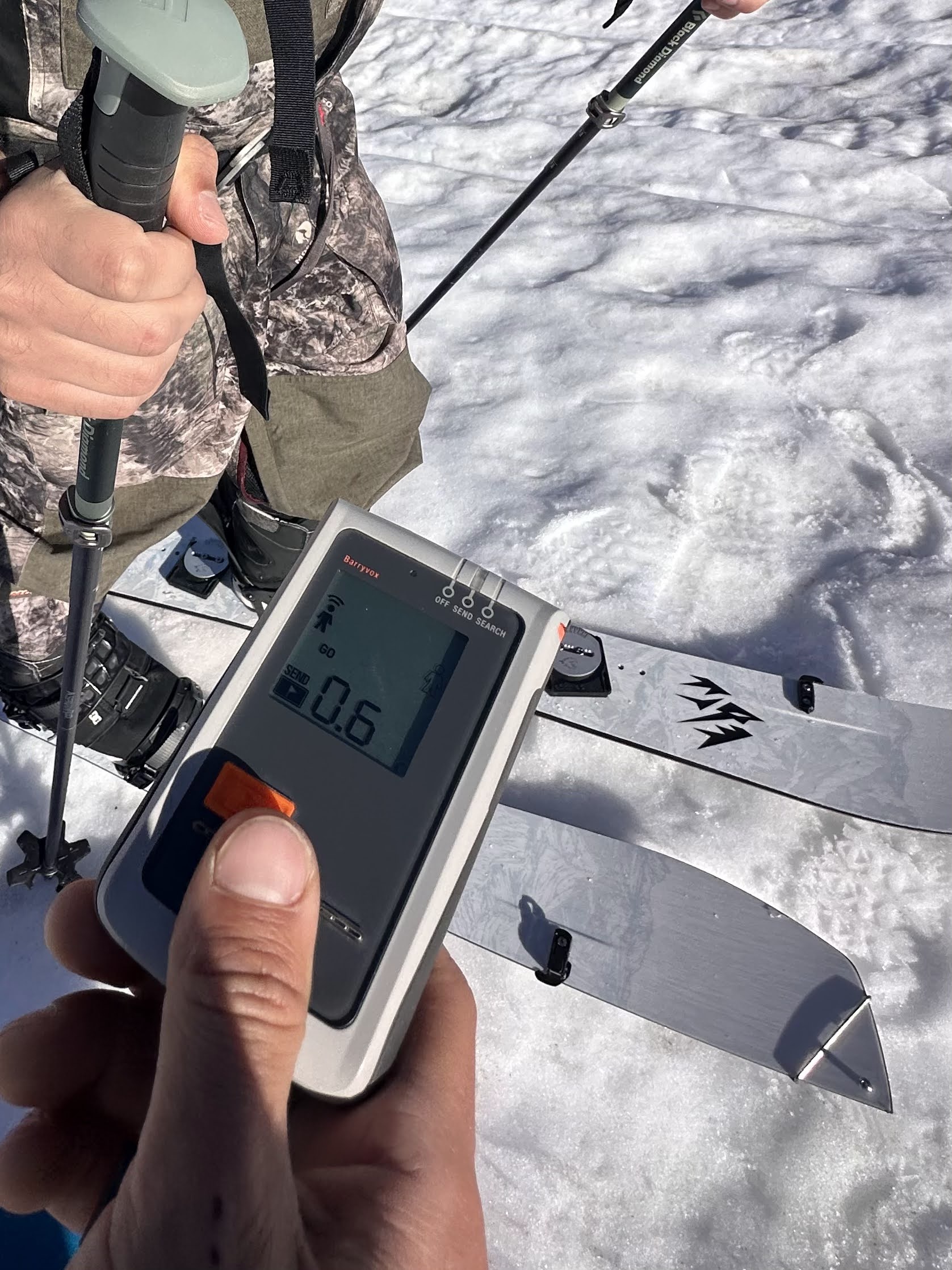
What kind of rider you arewhen the groomed snow ends
Before you write to me, see yourself in one of these three. What matters is how you handle the descent off the groomed snow — not how fit you are: that’s how we decide where to go. And if you feel halfway between two, write anyway: a couple of messages and we’ll work it out together.
Your first time
You ride red runs safely and you’ve already poked your nose off the groomed snow. You’ve never strapped into a splitboard: you learn in ten minutes and the walking part really is short.
A short skin, one lineYou’ve been there
You ride off-piste regularly, variable snow doesn’t scare you, you carve on blacks. Here we extend the range: more traverses, different mountainsides, two or three lines in the same day.
A couple of short climbsYou’re after the lines
Powder, long slopes, the odd couloir. You can read the terrain and you want to get where knowing how to get there matters. This is where knowing the area by heart makes the real difference.
Where it takes walking, we walk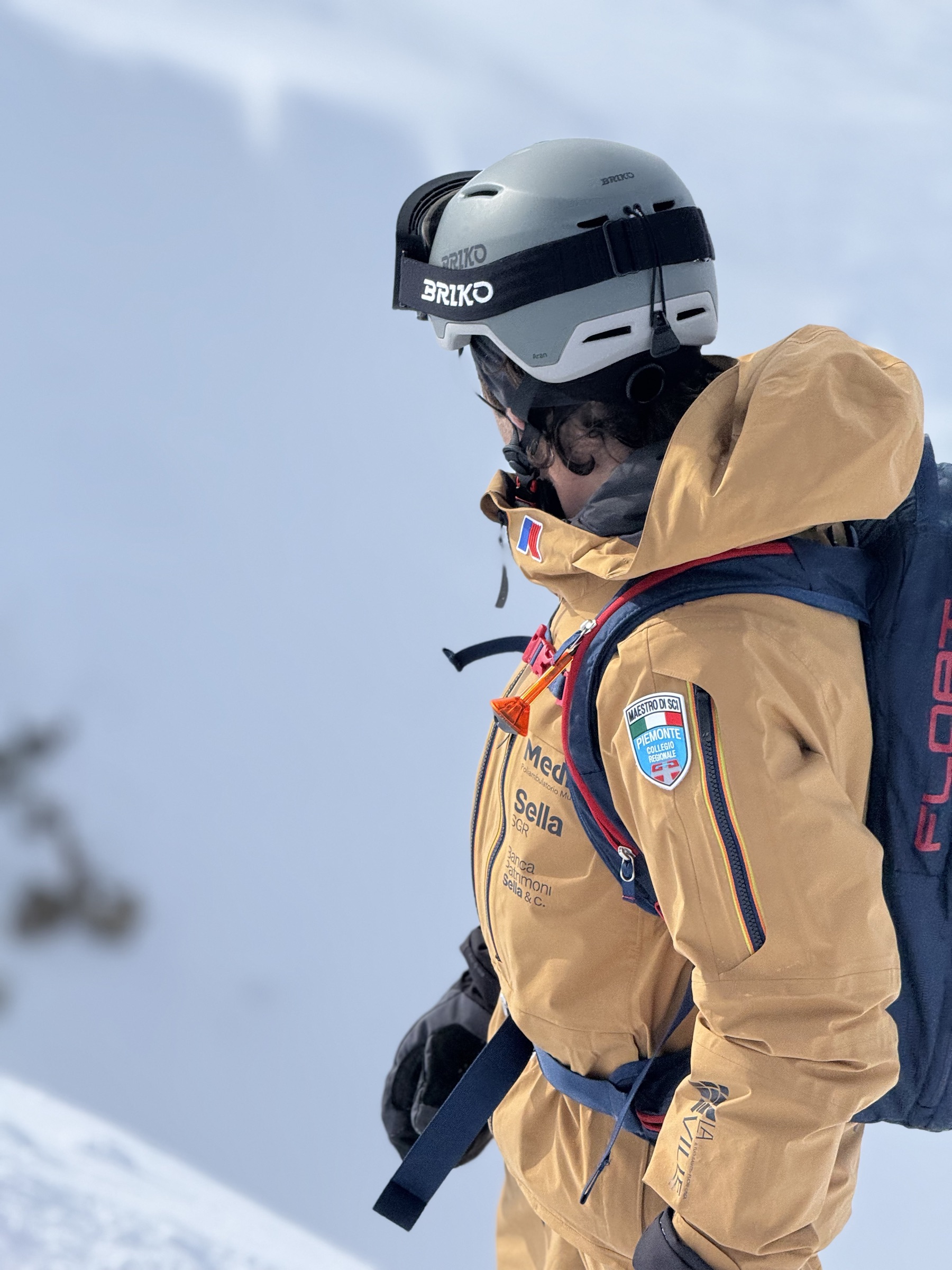
Off-pisteI take you myself
I’m Gigi Lozzi, a snowboard National Instructor (the highest Italian national teaching qualification, awarded by FISI). But for these days one other thing matters most: I’ve been riding these bowls for years. I know which mountainside holds the snow three days after a snowfall, what time of day rides well and when it’s already too late, and the lines you can’t even see from the piste.
It’s exactly the difference between going somewhere and experiencing it the right way.
The list,no shortcuts
Haven’t got a splitboard? No problem: we have a partner hire shop in Sestriere. Tell us when you book, so you’ll find it ready in the morning — right size, skins cut to fit.
Ask about hireLunch at a mountain hut
The bit that turns a session into a day out. You take off your backpack, eat in a Via Lattea hut and relive the descent by telling it. We book it for you.
Shuttle
When the best line doesn’t come back to where it started, we pick you up in the valley. That way you choose the right descent, not the convenient one.
Photographer
A photographer who climbs with you. The first snowfall wipes out your tracks — the photos stay.
Quello checi chiedono sempre
Yes, and it’s the most common case. Splitting and reassembling it takes ten minutes to learn, the climbing stride another ten. What you really need is to be able to ride down: if you’re confident on the piste and have already poked your nose off the groomed snow, you’re ready for a first session.
Not much, and it’s the whole point of this page. The lifts do the heavy work and the skins are only for the last stretch, the bit the lift doesn’t cover. We don’t sell vertical: the climb is the shortest part of the day.
If you then want to walk more because you enjoy it, that’s fine — but it’s your choice, not the programme.
The objective. In ski touring the focus is the climb: the descent is the way back down. Here it’s the opposite: the focus is the line to ride, and the climb is the means to reach it. That’s why we try to ride more than one in the same day, rather than a single long one.
They’re always needed, all three, for every person in the group: you don’t go off the groomed pistes without them. If you haven’t got them, say so when you book and we’ll sort it out with the partner hire shop.
If you have them but have never really used them, look at the dedicated transceiver-search experience: it’s made for exactly that.
No, the lift pass is bought separately. And you need it: the lifts do most of the climbing, so without one you can’t start. The session price covers the instructor and the group.
Same goes for equipment hire, if you need it.
From 1 to 5 people, for both the half day and the full day; the price is for the group, so the more of you there are the less each pays. The 3-day workshop runs from 1 to 5 people.
We don’t go above five people. On ungroomed snow a big group spreads out, waits around and safety drops.
On the Via Lattea; the exact spot is decided on the morning itself: it depends on where it has snowed, how the wind has worked and what time it is. That’s the advantage of having 400 km of ski area: there’s almost always a good line somewhere.
We often end up on the French side. Bring ID.
Today, yes. The binding-to-board interface has reached a level where, once reassembled, you can’t feel the difference on the descent. Ten years ago it was a compromise; not any more: it’s a freeride board that, on top of that, takes you wherever you want.
One minuteand you get it
A short climb, you reach the top and ride down in fresh snow. One minute of video and you’ll see what it’s like.
Watch on YouTube →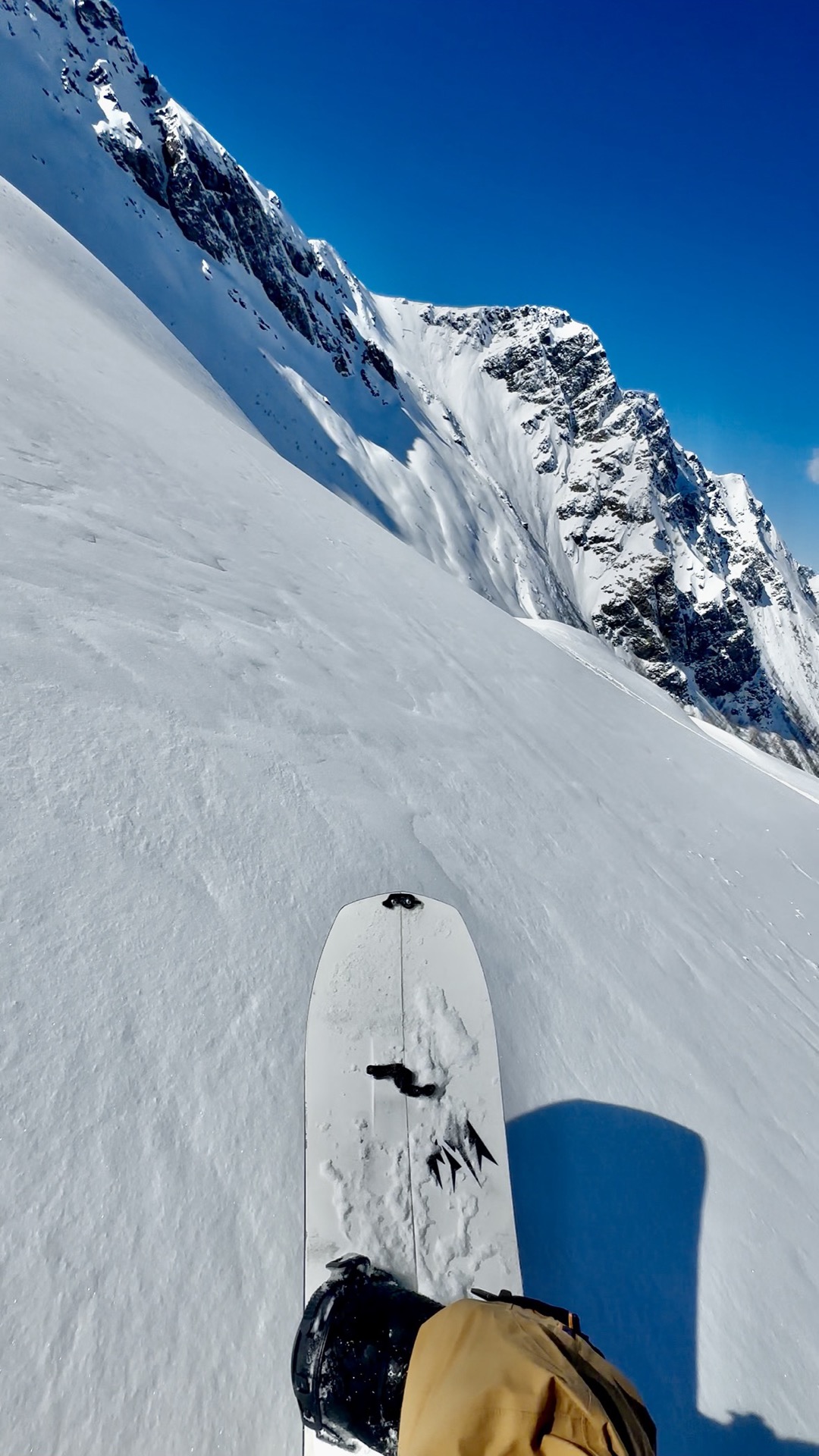
Tell me what you have in mind,I’ll handle the rest
Write to me on WhatsApp: I’ll tell you what the conditions are like these days, which session makes sense for you and what you need. If you haven’t got the equipment, we’ll take care of it.
Our partners